
We’re All Storytellers. We Just Don’t Always Think of Ourselves That Way.

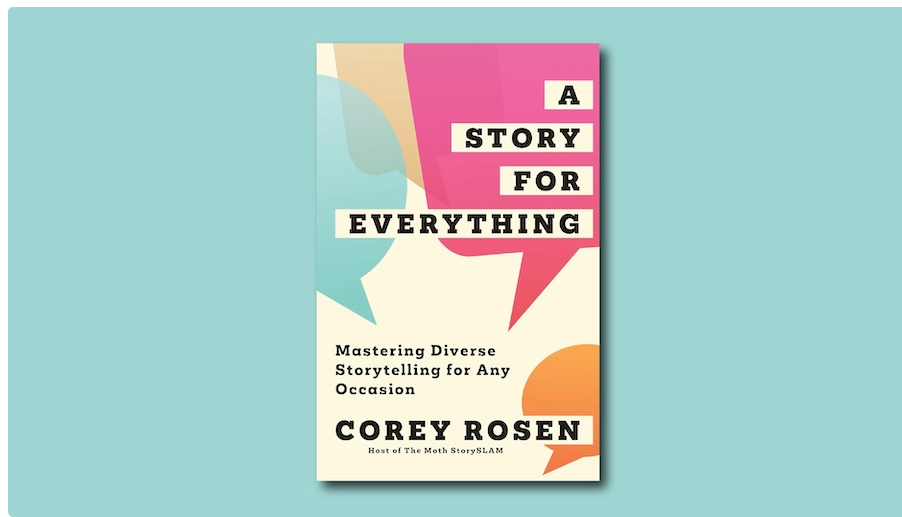
When someone hears that I teach storytelling, I sometimes get the same question:
“But what if I’m not a storyteller?”
I understand the question. We tend to think of storytellers as people who perform on stages, write books, host shows, or have some natural ability to hold an audience's attention.
But I’ve come to see storytelling differently. We’re all telling stories all the time.
It’s how we connect. It’s how we communicate. And it’s how we make sense of our experiences.
That idea became one of the foundations of my latest book, A Story for Everything: Mastering Diverse Storytelling for Any Occasion.
Storytelling Isn’t Just for Storytellers

The book grew out of years of performing, teaching, and coaching.
When I started attending and hosting storytelling shows like The Moth, I discovered the freedom that came from developing and sharing my own voice. Eventually, performing led me to teach others how to frame their experiences in ways that could be funny, moving, surprising, or meaningful.
But the more I taught, the more I realized that storytelling wasn’t limited to the stage.
You might use a story in a job interview. Or when giving a presentation. Or writing a college application essay. Or giving a performance review. Or making a wedding toast.
Or trying to explain to someone why a particular experience changed the way you see something.
The setting changes. The need for connection doesn’t.
Sometimes a Story Works Better Than an Explanation
One of the stories I’m particularly proud of in the book came from an unexpected source: a reel-to-reel recording I found at my parents’ house.
My father was a pediatric dentist, and the recording captured a conversation he had with a patient’s mother after a particularly challenging dental procedure.
Instead of simply telling her what to do, he shared stories and lessons from other patients and situations he had encountered.
He wasn’t lecturing her. He was illustrating what he had learned through experience.
And something interesting happened. The mother came to her own conclusions and verbalized them herself.
That’s one of the things stories can do that facts and instructions sometimes can’t. They give people something to picture, relate to, and think about.
My Own Creative Process Uses the Same Principle

Writing A Story for Everything also forced me to practice what I teach.
I tend to second-guess my writing. When I put words on a page, my internal critic immediately starts asking whether they’re good enough, clear enough, or worth keeping.
So I started writing out loud. Sometimes I’ll talk through an idea with someone else. Sometimes I’ll record myself in my voice memos app.
When I’m speaking, I’m less focused on whether every sentence is perfect. I can let the idea emerge before I start judging it. That separation between creating and editing has been incredibly useful for me.
Sometimes the best way to get a story unstuck is to stop worrying about getting it right and simply start telling it.
There Really Is a Story for Everything
That’s ultimately what I hope people take from A Story for Everything. You don’t have to consider yourself a storyteller to use storytelling. You just have to recognize that your experiences already contain stories. The trick is learning how to shape them, when to use them, and how to tell them in a way that connects with the person listening.
Whether you’re standing on a stage, sitting in a job interview, speaking to a team, writing an essay, or simply trying to make sense of something that happened to you, there’s probably a story that can help.
Want to hear more about how I developed these ideas and what went into creating A Story for Everything? Read the full Fanbase Press interview for the conversation about the book, my creative process, and why storytelling belongs in more parts of our everyday lives.


Comments