
A Story for Everything: Storytelling Is a Skill Anyone Can Learn


You don’t have to be a professional storyteller to tell a good story.
You don’t even have to think of yourself as a storyteller.
In fact, I believe storytelling is a skill we’re all capable of learning and improving.
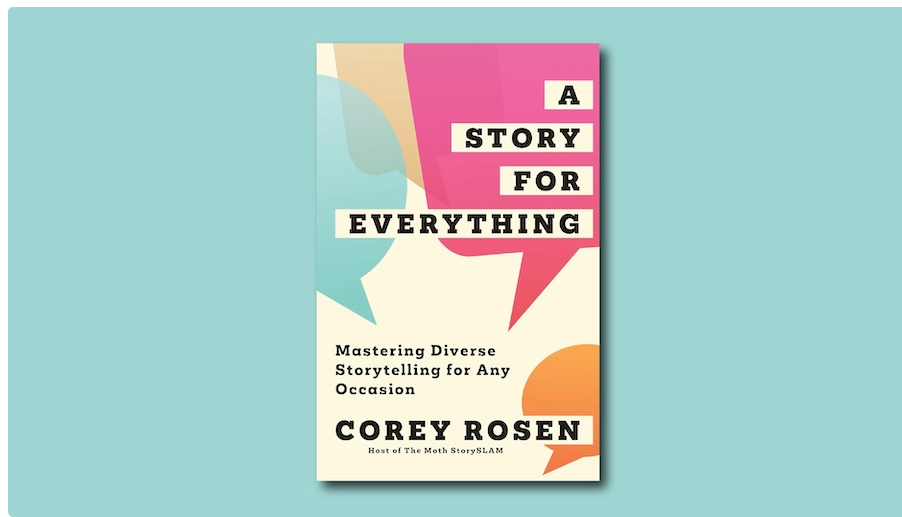
That’s one of the ideas at the heart of my book, A Story for Everything: Mastering Diverse Storytelling for Any Occasion, and it’s something I had the chance to talk about on the GSMC Book Review Podcast.
Storytelling Is Already Part of Your Life
We often associate storytelling with stages, books, or performances.
But storytelling shows up in much more ordinary places.
A business presentation.
A job interview.
A classroom.
A wedding speech.
A eulogy.
A conversation with a friend.
Any time you’re trying to help someone understand something, remember something, or care about something, a story can help.
The question isn’t whether you have stories.
You do.
The question is whether you know how to shape them.
Start With What Happened
One of the biggest mistakes people make is trying to make their story meaningful before they’ve figured out what actually happened.
Instead, start with the experience.
What happened?
What changed?
What did you notice?
What did you think or feel in that moment?
The details that seem small to you can be the things that make a story memorable to someone else.
Once you have that specific experience, you can begin shaping it into something with a beginning, middle, and end, and then consider what you want your audience to take away from it.
Storytelling Gets Better With Practice
Another misconception is that great storytellers are simply born that way.
Some people may have a natural instinct for it, but storytelling is a skill.
It can be practiced.
It can be structured.
And it can get better with experience.
That’s one reason I encourage people to experiment with telling their stories out loud. You learn things when you actually hear yourself tell the story that you might not notice when you’re staring at a blank page.
You also start to learn how an audience responds, where their attention changes, and which details actually matter.
There’s a Story for More Than You Think
One of the things I love about storytelling is how many places it belongs.
You can use it to make a presentation more engaging, make an interview answer more memorable, help students connect with an idea, or make a wedding toast feel personal instead of generic.
You can also use it in the moments when the stakes are much higher, like saying goodbye to someone you love.
The form may change, but the basic goal remains the same: connect with another person through an experience.

That’s why I wrote A Story for Everything.
Not because everyone needs to become a professional storyteller, but because everyone has experiences worth sharing, and knowing how to shape those experiences can change the way we communicate.
Want to hear more about storytelling, the ideas behind A Story for Everything, and practical ways to become a more confident storyteller? Listen to my full conversation on the GSMC Book Review Podcast.


Comments